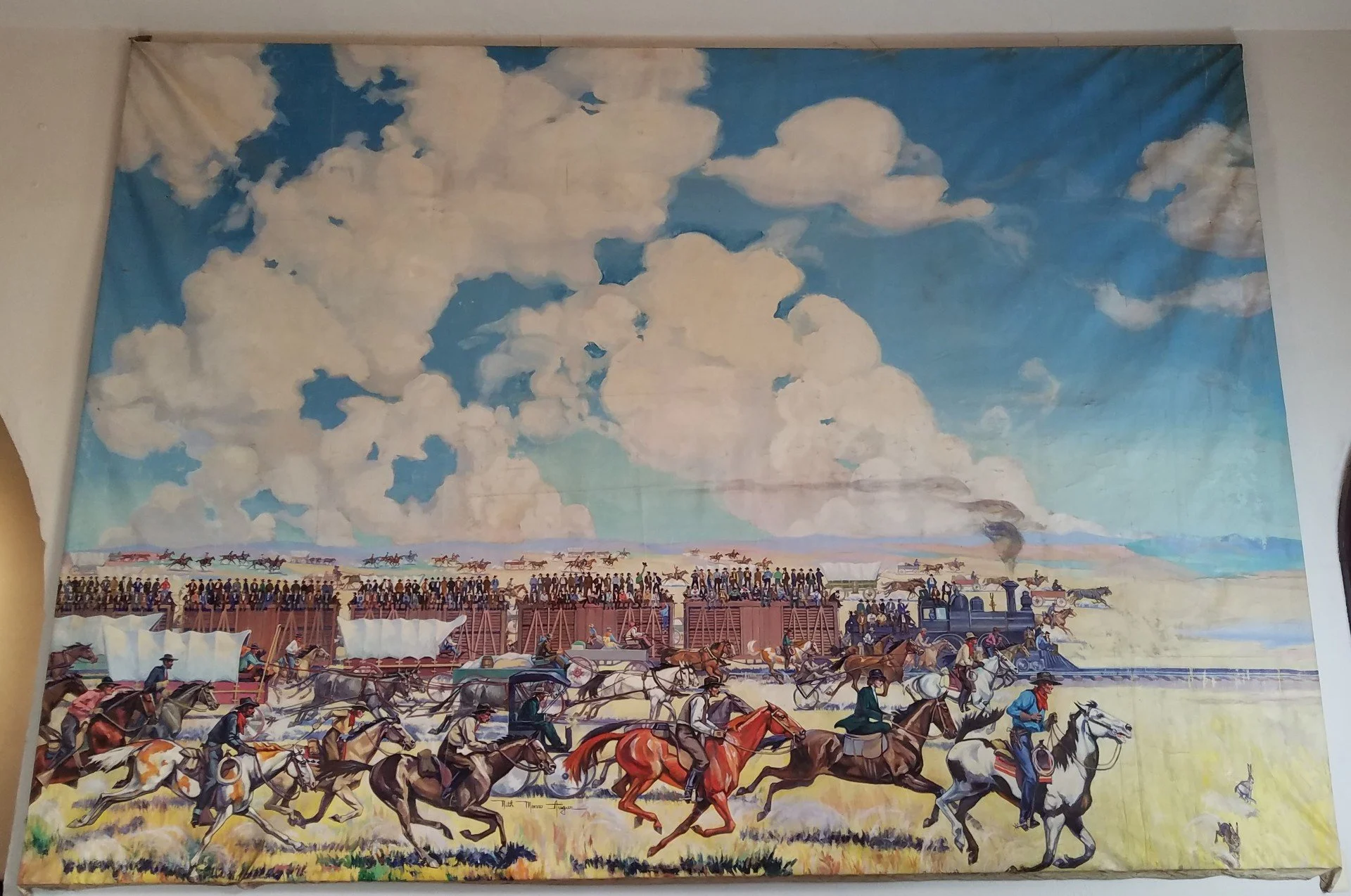
The following is direct from Ruth Monro’s her own hand when writing a short bio to be used in conjunction with the promotion of her WPA murals.
In her own words:
Miss Augur is the artist creating and painting the historical murals for the Garfield County Courthouse at Enid, Oklahoma, Under the WPA.
Daughter of Capt. Charles N. Augur, U.S. Vols. Spanish American War, and Mrs. Cecilia Hall Augur, of San Antonio, Texas. (Daughter of Gen. Robert Monro Hall, U.S.A.)
Ancestral Background:
The Augurs have been in this country since colonial times. The colonial records of New Haven Colony, Conneticut, record an allotment of land to Nicholas Augur, in 1643. Miss Augur is a direct descendant from his nephew, Robert Augur, who joined his uncle in the colony in 1668. The Augurs have taken a prominent part in the building of this nation. They have been in all wars, from the early colonists struggle with the Indians, the Dutch and the French, down to the World War. (NOTE: WWI was several years away) There were two Augurs in the Lexington-Concord battles, and four in the Revolutionary Army. The name of Augur is borne by a horse in the Riding Academy at West Point, commemorating a former commandant of the academy at West Point who commanded an army corps during the Civil War. Another Augur is commemorated by a street in Fort Riley, and still another, who was commandant at West Point when General Pershing was a cadet, has named for him a barracks at Jolo, Philippine Islands. An Augur commanded the U.S. Troops stationed in Washington and Oregon in the early days of its settlement and Augurs were among the army Indian fighters in the subduing of the western Indians. There were also Augurs in the Navy.
Hezikiah Augur is given considerable space by Larodo Taft in his book on Amercican Sculptors and is called by him the first American sculptor. His work included a head of Washington, a bust of Chief Justice Oliver Ellsworth in the Supreme Court at Washington, and statues in the Trumbull Art Gallery of Yale University.
On the maternal side, her great-grandfather was an early pioneer in Ohio, when that became too civilized he moved Wisconsin, building the first log cabin where the city of Milwaukee now stands, later moved to San Antonio, shortly after Texas had won her independence from Mexico. Four generations of his family call San Antonio home.
Her grandfather, Gen. Hall, regular army, served with the First U.S. Artillery when it was sent to Washington and Oregon, the first regiment of U.S. Troops to occupy the country following the Lewis-Clark expedition. He also saw service in the Indian campaigns in the Southwest and Texas, and served with distinction in the Civil War.
It's apparent that Miss Augur was very proud of her family's contributions to the growth of a young nation. Her tenacity, attention to historic accuracy and sense of showmanship are all very visible through her colorful murals that bring the Post-Coronado West to life on the walls of the Garfield County Courthouse.
Miss Augur was born in Austin, Texas, 1886, when Oklahoma was still considered Indian Territory, and as a young girl, once rode a horse unaccompanied across the plains. That's the story, and I don't really doubt it after getting 'to know' this fiercely independent and savvy woman.
She was an advocate for the right of women to vote and was instrumental in procuring that right through her suffrage work.
Ruth also worked for many different newspapers in her earlier career, covering beats from general reporting, sporting news, army movements, real estate, music, feature articles, and later editor of a woman's page for a total of twelve years.
Miss Augur was registrar of the College of Mines and Metallurgy of the University of Texas at El Paso, also for twelve years.
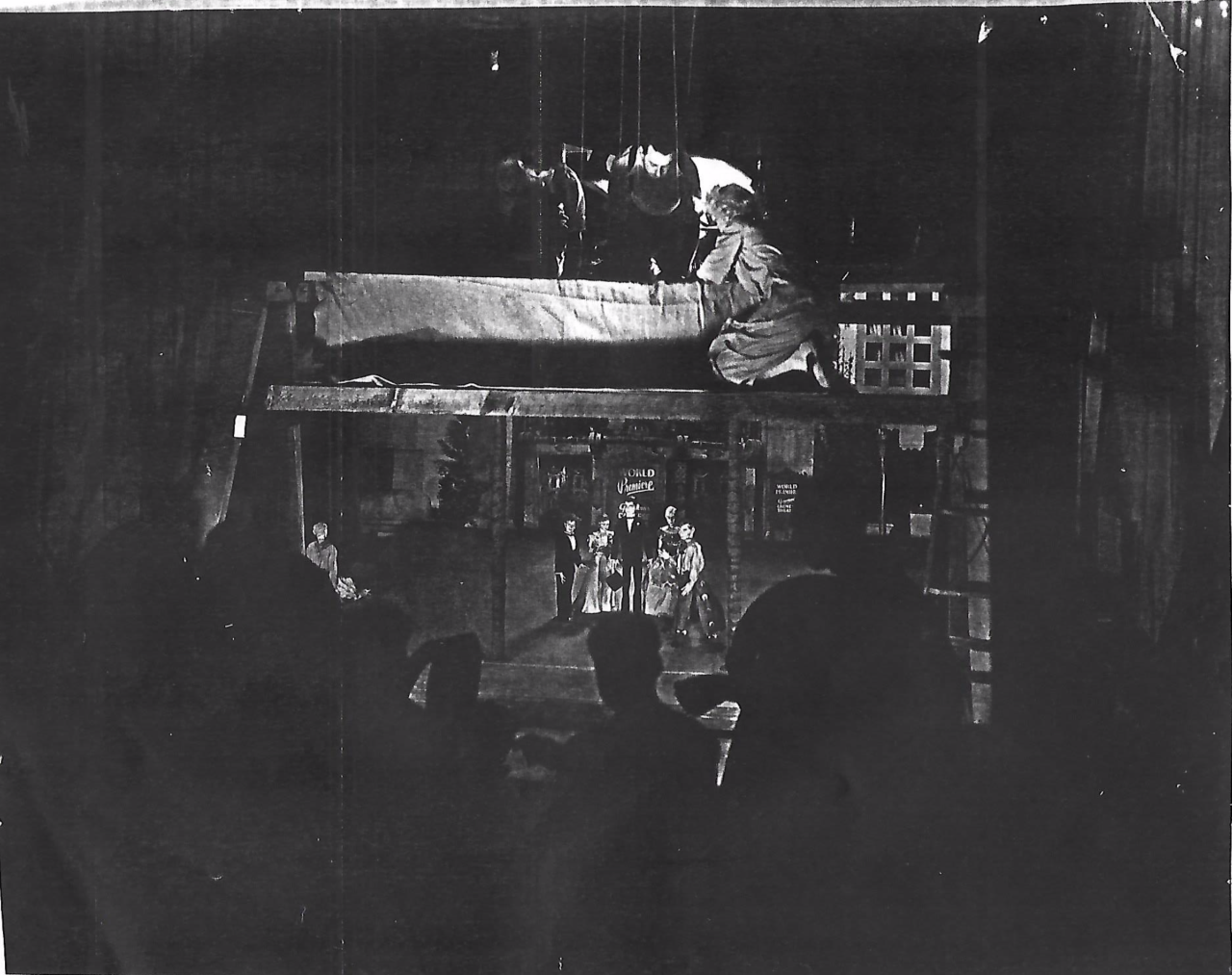
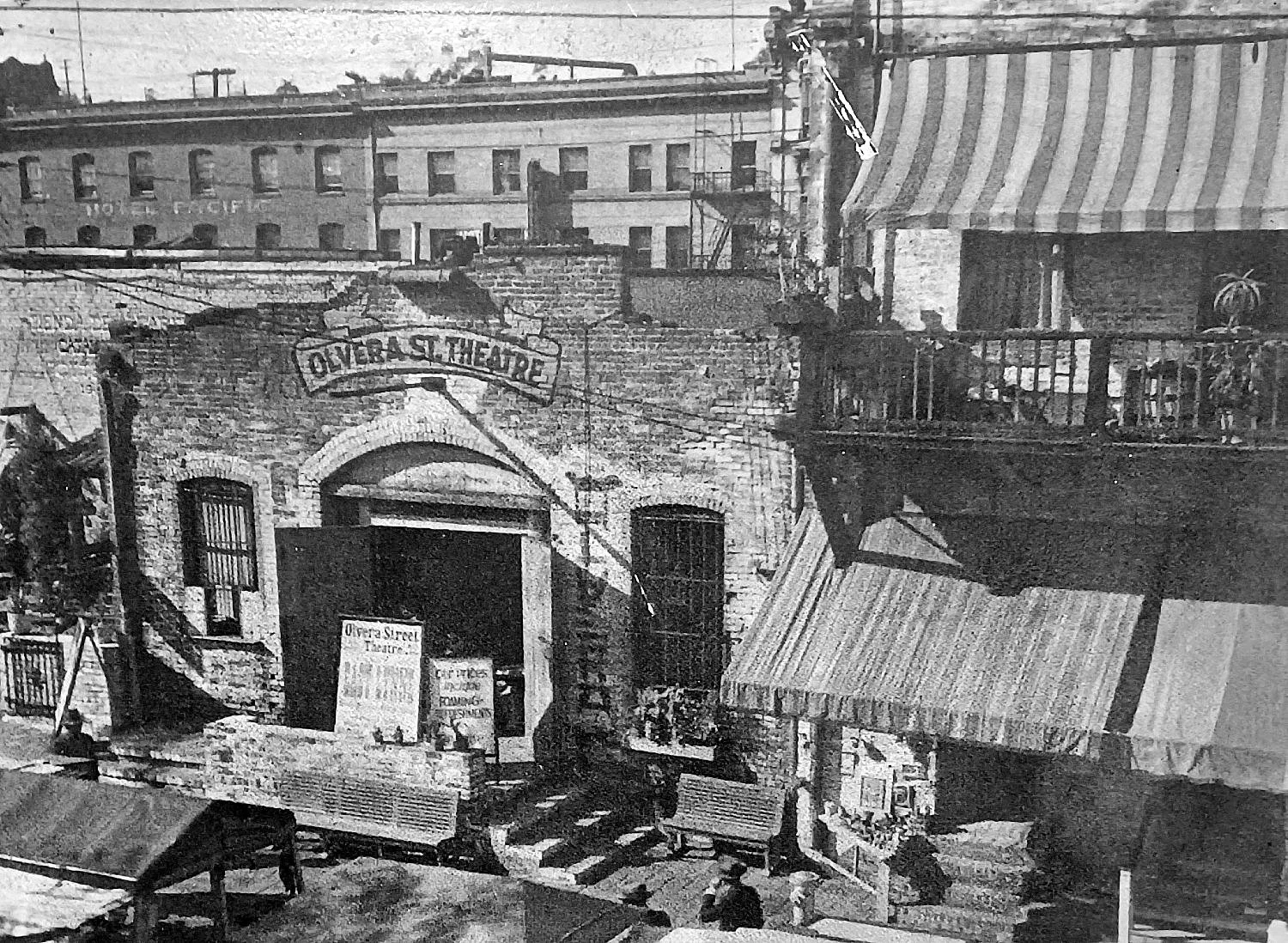
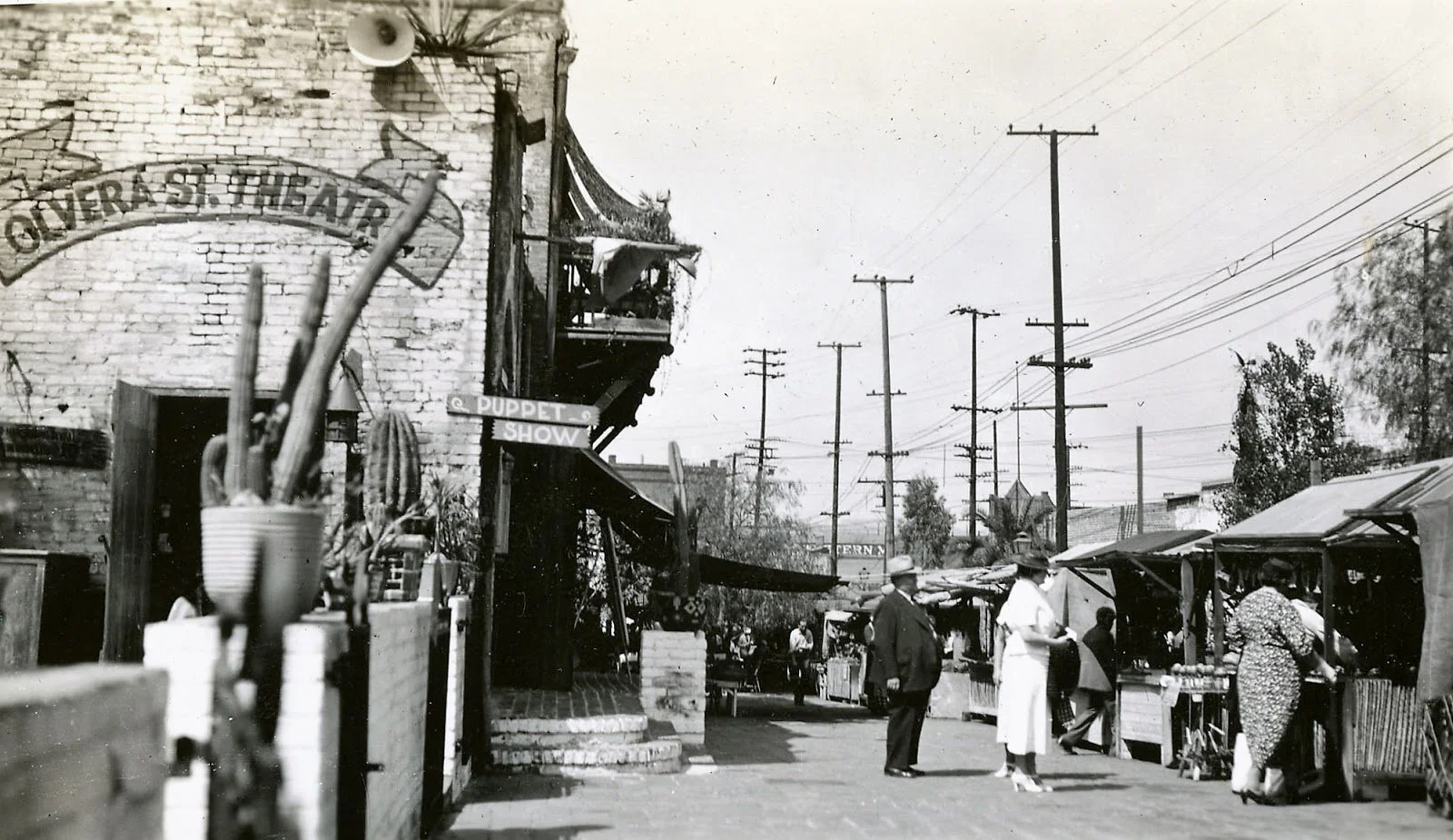
After all of these accomplishments and years of art training, she ended up making portrait sculptured heads for her famous marionette troupe out of Los Angeles, performing in the world renowned Teatro Torito theatre on Olvera St., Los Angeles, CA., filling in for the ‘Yale Puppeteers’. From there, she booked a small space on Sunset Blvd in Hollywood and named it ‘The Hollywood Puppet Theatre’. She operated her marionette show there for a short time before embarking on a ‘Transcontinental Tour’ with her own ‘Monro Marionettes’.
It would be an injustice to Ruth’s tenacity, drive, talent, showmanship, and just plain courage to gloss over Monro’s Marionettes. At a time in our country’s history when women were frowned upon for entering the workplace, Ruth owned, ran, and managed her own traveling marionette troupe. By the looks of the newspaper articles, I’m guessing she also wrote most of the press releases and a good bit of the stories that reporters copied and printed. She knew how to write and how to capture an audience, holding their attention whether it be on the stage or in print.
This short, video clip is the only known video of Monro Marionettes. I believe this is from the summer of 1931, when Ruth’s troupe was filling in for the original troupe at the theatre. It was from here that Monro Marionettes made their way across the American Southwest.
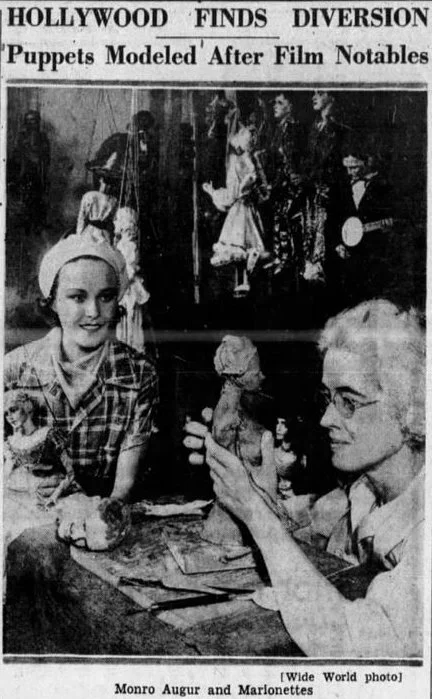
Her big draw on the marionette tour was sculpturing marionette heads that were clones of the stars of the day such as Clark Gable and Will Rogers.
I believe Ruth saw the beginning of the end for marionette entertainment as people gravitated more and more to films and even radio shows. The allure of the traveling marionette show coming to town just was not as compelling as it once was. She was also actively securing a WPA contract for mural work at the time and tried, unsuccessfully, to obtain the contract for the Austin, Texas, Courthouse.
Miss Augur’s marionette tour brought her to Oklahoma where she applied, and received, the contract to paint the historical murals in the courthouse that was under construction in Garfield County. Enid, Oklahoma, to be specific.
Contrary to some misinformation on a few historical websites, Ruth was not stranded in Oklahoma and ‘forced’ to paint WPA murals. This was what she sought and it was an honor to be chosen for such important work. She was right where she wanted to be. As always.
While waiting for confirmation on the WPA contract, Ruth taught art classes and took on commissions from Enid, OK, residents, where she had moved.
Ruth disbanded her troupe once she received the WPA contract and focused on the research required to paint the historically accurate works. She estimated, in time, she spent about 1 1/2 years researching before paint ever hit the canvas.
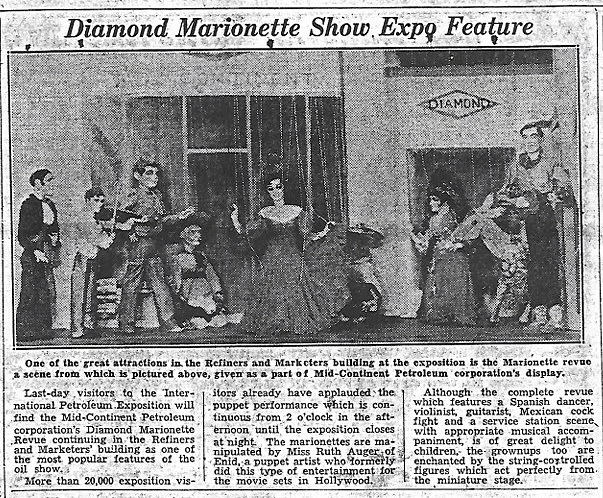
As for the marionettes, I originally thought that she never held another marionette show after the final performance in Tonkawa, Oklahoma, but I found an old Tulsa, OK, newspaper that shows Ruth did a marionette show for the International Petroleum Exposition in 1934. The show was held in the Refiners and Marketeers building, with the marionettes billed as ‘Mid-Continental Petroleum Corporation’s Diamond Marionette Revue’.
According to my latest, deep dive research, this is the last show Ruth did with her marionettes. She did keep them for the rest of her life, and when she passed away, the marionettes went to her caregiver, and from there a private collector who plans to donate the marionettes to the proper museum when the time comes.
Miss Augur taught private art classes for many years in Enid and OKC after finishing the WPA murals in 1937. She later headed the art school of the Oklahoma Art Center and became staff artist for Harlow Publishing Co, illustrating numerous books.
Many of Ruth’s other works while in OKC are now lost to time and, in some cases, the elements. Fortunately, many of her paintings are held in private homes and collections throughout the world. She will always be best known for her historical murals in the Garfield County Courthouse.
Well, I hope this gives you a fuller picture of the artist behind the murals, and I’d like to think that Ruth would appreciate it.
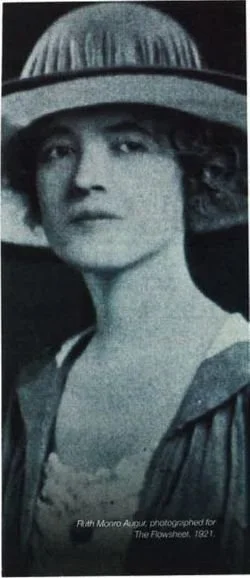
Ruth Monro Augur
November 4, 1886-March 10, 1967
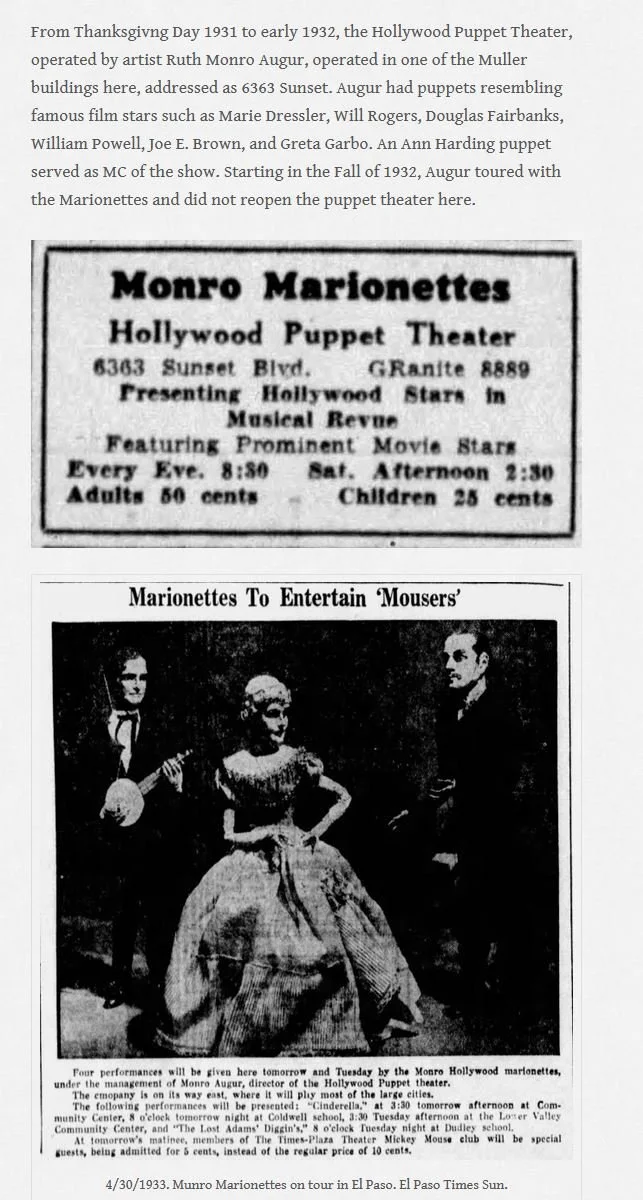
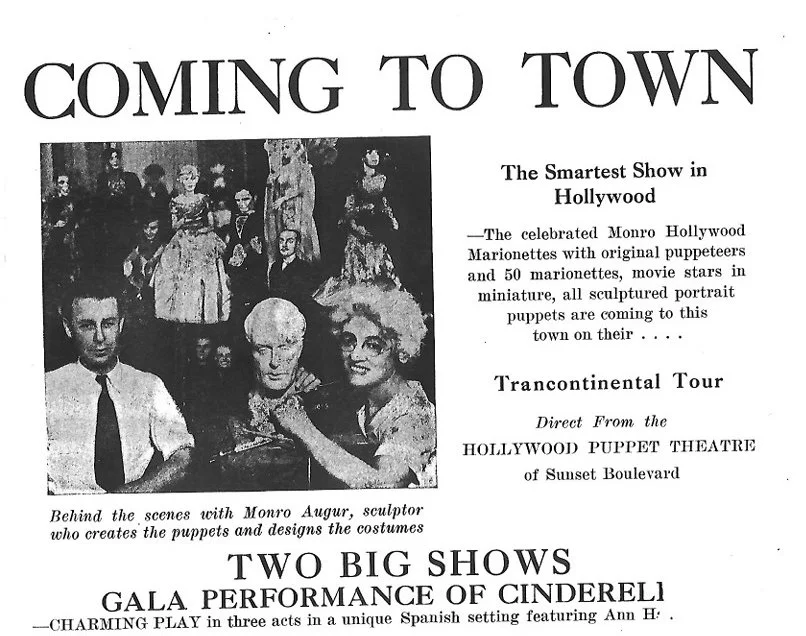
The following copy of an old flyer, probably from 1932, shows Ruth on the right sculpting the gentleman on the left, with her marionettes in the background.
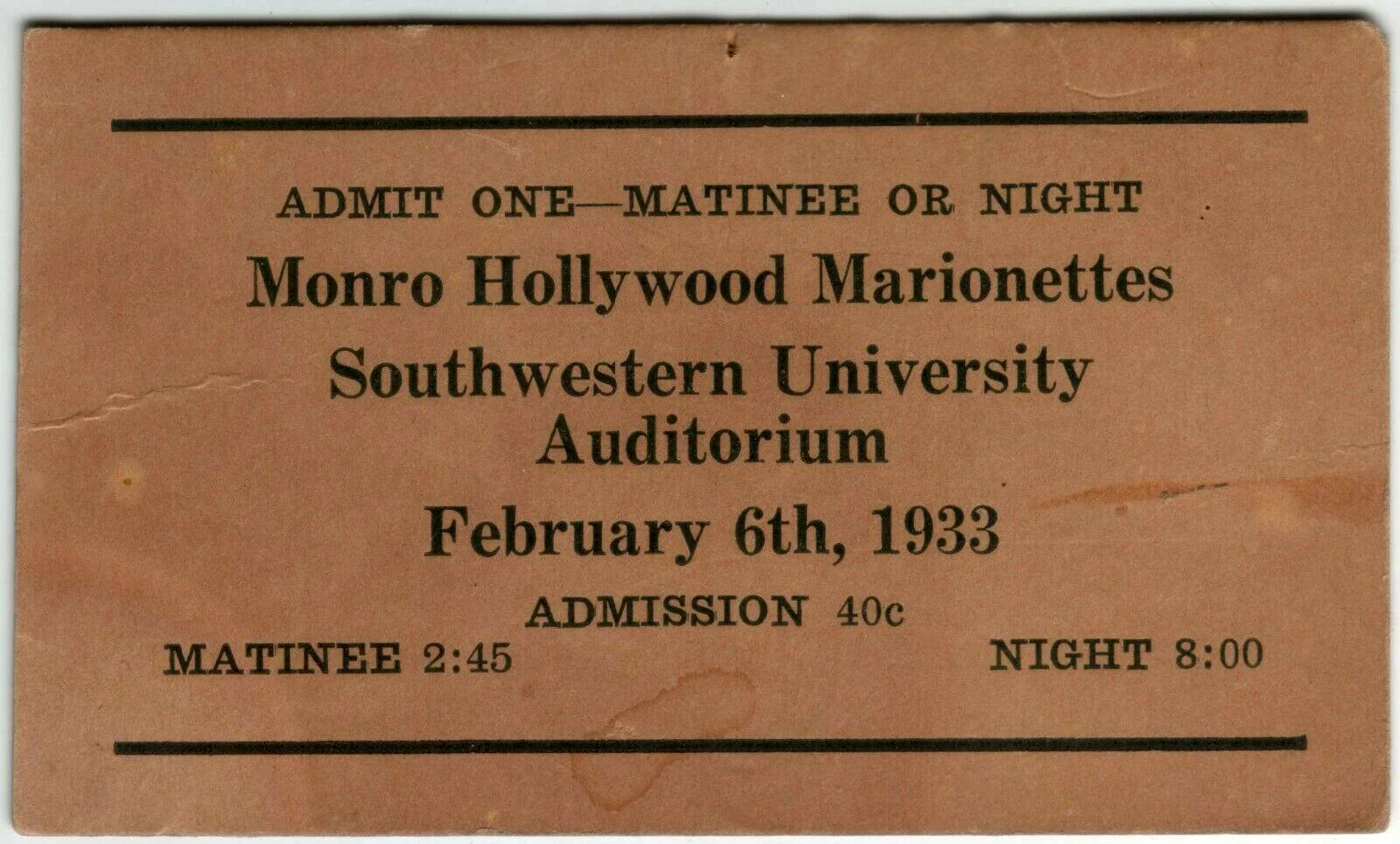
Taking her show on the road in the American Southwest as Monro Marionettes, and at times Monro Hollywood Marionettes, she played shows from Hollywood, New Mexico, Texas, Louisiana, and Oklahoma.
The only known photograph of Ruth while working her Monro Marionettes. Probably from the Hollywood Puppet Theatre, 1931 or ‘32.